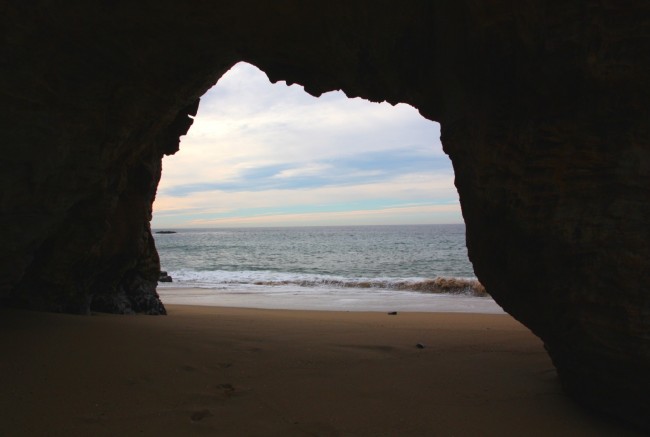
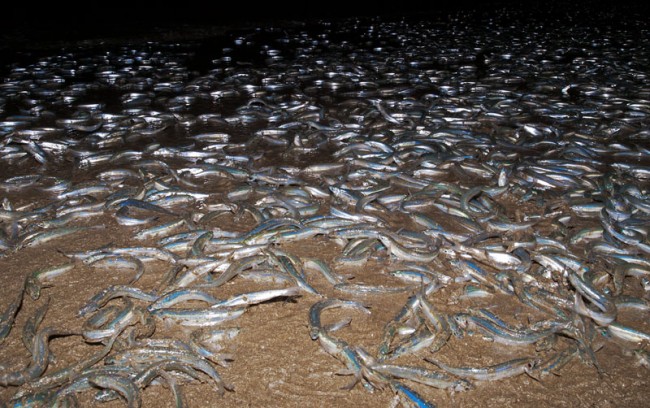
Point Reyes National Seashore holds
some similarities to its Southern California counterpart, Santa Monica
Mountains National Recreation Area. Both national parks sit close to
California's largest cities, yet maintain their unspoiled appearance. The
major differences between the two national parks, however, are their natural
features. One is provides mountain terrain as its attraction. Point
Reyes is all about fishing, boating and immediate proximity to a bay.
Point Reyes National Seashore features
over 71,000 acres, including 32,000 acres of wilderness, just less than half
the size of the Santa Monica Mountains recreation area. With 80 miles
of unspoiled and undeveloped coastline, the Marin County national park
features over 900 species of flowering plants and nearly half the bird
species in North America. Deemed by the American Bird Conservancy as a
globally important bird area, it is also significant for 24 threatened and
endangered species found at this seashore and bay.
Uniquely formed by the San Andreas Fault, Point Reyes Peninsula is separated
from the rest of the North American continent. While such land formations
occured millions of years ago, the recorded history of Point Reyes extends
back some 5,000 years to the Coast Miwok Indians who were the first
inhabitants of the peninsula. One of California's earliest explorers,
Juan
Rodríguez Cabrillo, for
which Cabrillo National Monument
in San Diego was dedicated, may have come as far north as Point Reyes before
heading south again on his exploration of the West Coast. He and explorers
to follow encountered treacherous waters in this portion of California.
In response to the many shipwrecks,
key lighthouse and lifesaving stations were established by the United States
government in the late 1800s and early 1900s.
Some of the assets of the Point Reyes National Seashore include: 286
designated historic structures, over 120 archeological sites, Point Reyes
Lifeboat Station, a National Historic Landmark, 4 backcountry campgrounds,
147 miles of trails, approximately 100 miles of roads, 3 visitor centers, 2
environmental education centers and 30 restroom complexes.
Point Reyes National Seashore was
established by President John F. Kennedy on September 13, 1962, to preserve
and protect wilderness, natural ecosystems, and cultural resources along the
diminishing undeveloped coastline of the United States. It is open to the public for recreational enjoyment.
Tomales Bay, the active waterway for
the Point Reyes National Seashore, is a 15-mile long, 6780-acre
tidal water body located in rural west Marin County, is the most popular
area for kayaking at Point Reyes National Seashore. It is the largest
unspoiled coastal embayment on the coast of California. Bounded on the west
by the Point Reyes National Seashore, adjacent communities include Tomales,
Pt. Reyes Station, Inverness, Marshall, and Dillon Beach in the north
where Tomales Bay meets Bodega Bay.
Recreational use of Tomales Bay has
grown in recent years and the National Park Service at Point Reyes has
created regulations about recreational use, especially for camping and
boating. Kayaking in Drakes Estero and Limantour Estero is prohibited each
year from from July through February to protect harbor seals during the most
crucial part of the pupping season. Hog Island in the northern section of
Tomales Bay across from Whites Gulch on the west side and Nicks Cove on the
east side is a favorite haul-out for seals and roosting place for brown
pelicans. This important wildlife habitat, is open on the west side only for
day use. Personal water craft (PWC) such as a Jetski or Waverunner are never
permitted on Tomales Bay.
There are four areas for launching on
Tomales Bay (information about these launch locations is supplied by the
National Park Service www.nps.gov)
Miller County Park (415) 499-6387
Also known as Nick's Cove, Miller County Park is located on the east side of
Tomales Bay off Highway 1, north of the town of Marshall. This Marin County
park has a public boat launch with cement grade into the water, restrooms,
and a pier. There is a day use fee and overnight use fee. Overnight parking
is in the upper lot, to the right as you pull in.
Tomales Bay State Park - (415) 669-1140
The state park provides two access areas to Tomales Bay, Millerton Point and
Hearts Desire Beach. Millerton Point is on the east side of Tomales Bay,
three miles north of Point Reyes Station. No overnight parking is permitted.
There is a pit toilet and you must carry your boat along a short trail
approximately 100 yards to the water. It is very shallow and is best used at
high tides. Hearts Desire Beach is on the west side of Tomales Bay off
Pierce Point Road. It is a day-use area (no overnight parking) and there is
a day-use fee. You must carry your boat approximately 100 yards across a
sandy beach. Water and restrooms are available at the beach. Orange floats
are placed in the water in summer to indicate the swimming area. Boaters may
land to the south of the orange floats. Motorized vessels are prohibited
within 100' of the swim area markers.
Golden Hinde Inn & Marina - (415) 669-1389
The inn and marina are located on the west side of the bay. It is off Sir
Francis Drake Boulevard three miles north of Inverness. There is a boat
launch fee and if you pay the launch fee, you may leave your car overnight.
No dump station.
Lawson's Landing - (707) 878-2443
The campground and boat launch are located in Dillon Beach with direct
access to Tomales Bay. There is gas, dump station, and boat rentals.
Restrooms and water available. There is a day-use and overnight fee charged.
If you plan to have a beach fire on national seashore beaches, stop by
national park visitor centers for a free required permit. No beach fires are
permitted on state park beaches. Some beaches you may enjoy on a visit to
Tomales include:
Hearts Desire Beach features a swimming area during the summer. Boaters may
pull up on the southern edge of the beach to access the restrooms and
drinking water. No overnight use or beach fires. Indian Beach north of
Hearts Desire has a redwood kotca, a traditional Coast Miwok sleeping
shelter on it. There is no overnight use or beach fires.
There is a fee and permit system for overnight camping on the west side
beaches of Tomales Bay (within Point Reyes National Seashore). Overnight
beach camping is not permitted anywhere else on Tomales Bay or within Point
Reyes National Seashore. Contact the National Seashore reservation office at
(415) 663-8054 for reservations and to place your name on the mailing list
for information. Some Tomales Bay beaches that are open for overnight
camping to those who have a current and valid permit are (listed from south
to north): Kilkenny Beach; Marshall Beach on the west side of Tomales Bay
across from the town of Marshall; Tomales Beach; Fruit Tree Beach; Blue Gum
Beach which experiences seasonal closures to protect harbor seal pupping;
Avalis Beach which sometimes has high tides and strong currents.
Tomales can seem distant and removed from the
city, due to its small size and rural atmosphere. You'll be hard pressed to
find a McDonald's restaurant, and that's part of its incredible charm.
Locals actually eat better, enjoying a plethora of natural resources both at
the Point Reyes National Seashore and nearby. In close proximity, there's
abundant wine
production, delicious seafood served in local restaurants and great chefs
who find this part of California a desirable location for intimate, upscale meal
preparations in small, boutique restaurants.
Lending to the ambiance are 100-year
old buildings representing a variety of architectural styles from Queen Anne
Queen Anne to Craftsman and Spanish Colonial Revival. Stop in Tomales to
shop, dine and even visit the Tomales Regional History Center located at
26701 Highway 1. Though the Center which is housed in a 1921 High School
gymnasium is usually open Friday through Sunday, you should call before
going: (707) 878-9443.
Tomales is located in Marin County in northern
California. Major destinations not far from Tomales include the San
Francisco Bay area and Napa, Sonoma and Mendocino wine country. Distances to
major destinations with a variety of hotel accommodations include:
28 miles - 37 minutes
Santa Rosa Hotels
16 miles - 25 minutes
Petaluma Hotels